
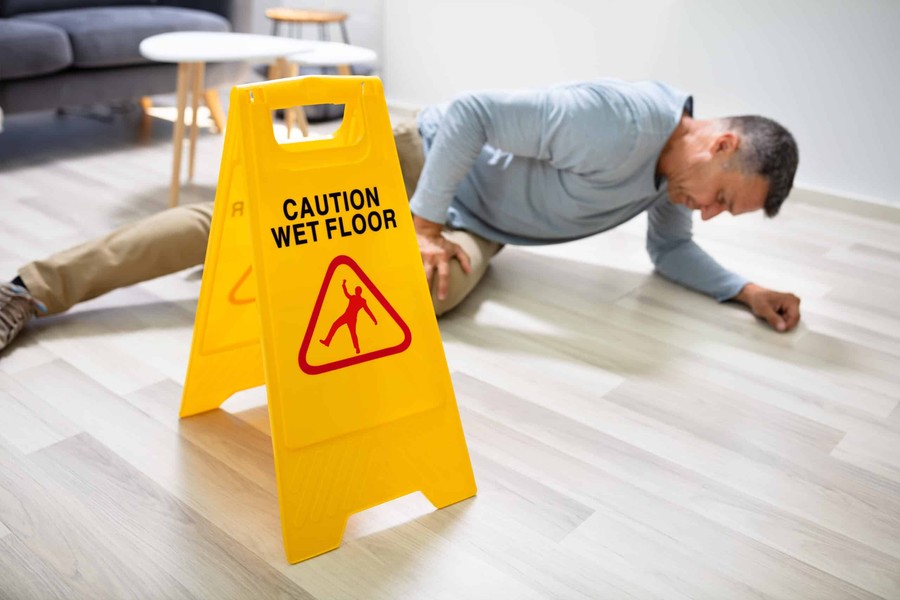
Slip and fall law in Florida has undergone significant transformation over the past two decades, shaping how courts evaluate responsibility and how injured individuals pursue compensation. These changes have not happened in a vacuum; they reflect policy debates, legislative amendments, and shifting views about corporate responsibility in a state defined by tourism, retail density, and high pedestrian traffic. Understanding the evolution of Florida’s premises liability framework is essential for anyone seeking justice after a fall. The attorneys at Chalik and Chalik, who exclusively represent injured individuals, often rely on this legal history to provide context and clarity when fighting for their clients’ rights.
Florida’s earlier slip and fall laws once offered broader protections for injured visitors, allowing claims to proceed with fewer evidentiary hurdles. Courts focused heavily on whether the hazard existed and whether the business failed to address it promptly. Over time, however, industry groups argued for more stringent standards, insisting that businesses faced excessive litigation for conditions beyond their control. This pressure culminated in the adoption of Florida Statutes §768.0755, which dramatically shifted the burden of proof onto the injured party. Under this statute, claimants must now demonstrate that the business had actual or constructive knowledge of the hazard—a substantial departure from previous legal standards.
This requirement has become the central focus of modern slip and fall litigation. Actual knowledge may be proven if an employee created the hazard or directly observed it. Constructive knowledge, however, is more nuanced. It allows the injured person to show that the hazard existed long enough that a business should have discovered it or that the condition occurred frequently enough that it was foreseeable. This requirement marked a turning point, transforming slip and fall cases from straightforward negligence disputes into complex evidentiary challenges. Legal analysts frequently compare this evolution with documented cases involving major Florida retailers, including issues highlighted in Walmart slip and fall litigation, where the duration of the hazard and inspection patterns are often central themes.
As Florida’s law evolved, courts increasingly emphasized the significance of documented safety procedures. Businesses were encouraged not merely to maintain their premises but to prove they maintained them. Inspection logs, employee training records, and cleaning schedules gained new weight as key forms of evidence. A business that failed to document its safety efforts effectively placed itself at a disadvantage. Conversely, a business with strong documentation could more easily challenge the injured individual’s narrative. This legal shift made cases more dependent on objective records than ever before, highlighting the importance of early evidence preservation on both sides.
Another notable development in Florida slip and fall jurisprudence is the growing importance of surveillance footage. Modern retail and commercial environments are increasingly equipped with cameras, and courts now recognize video evidence as one of the most reliable tools for evaluating liability. Footage can reveal how long a spill was present, whether employees ignored visible hazards, and whether visitors acted reasonably. The increased role of video evidence has made timing disputes more precise, reducing speculation but intensifying the burden on injured individuals to seek preservation quickly. Legal professionals have observed this trend in various cases, including analyses of Publix slip and fall claims, where video has often clarified conflicting statements.
Florida’s courts have also refined how they interpret foreseeability, an essential component of constructive knowledge. Rather than viewing each accident in isolation, courts now evaluate whether the hazard resembles conditions known to occur repeatedly in the same location. For example, condensation forming beneath refrigerated units, frequent spills in high-traffic produce aisles, or moisture tracked inside during storms may all be considered foreseeable hazards. This legal approach recognizes that some risks are inherent to certain environments, and businesses must adapt accordingly. The shift toward foreseeability strengthens cases where injured individuals can demonstrate recurring problems that the business failed to address.
Comparative negligence has evolved alongside these developments, becoming a more prominent tool for defense counsel. Under Florida’s modified comparative negligence standard, compensation can be reduced if the injured person is found partially at fault. Modern cases increasingly involve arguments that the visitor should have noticed the hazard, worn safer footwear, or exercised greater care. This strategic shift underscores the importance of presenting clear, persuasive evidence of how the fall occurred and why the hazard was not reasonably observable. Attorneys representing injured individuals must now anticipate these arguments and prepare detailed responses supported by photos, video, and expert testimony.
These legal evolutions have collectively reshaped the landscape of slip and fall claims in Florida. While the burden on injured individuals has increased, the framework also created clearer standards for evaluating negligence. Businesses are expected to anticipate hazards, document their efforts, and respond promptly to known risks. When they fail to satisfy these obligations, evidence often reveals preventable patterns of unsafe conditions. For victims, understanding this legal evolution helps demystify why certain evidence matters and why timely action after an injury is so critical.
The attorneys at Chalik and Chalik leverage these legal developments to build cases grounded in statutory interpretation, documented patterns, and investigative precision. They understand how Florida’s historical and modern standards intersect, allowing them to counter aggressive defense tactics and ensure that the law protects those it was intended to safeguard. By examining the evolution of slip and fall law, injured individuals can better appreciate the importance of strong representation and the need for comprehensive evidence when seeking justice under Florida’s premises liability system.
