
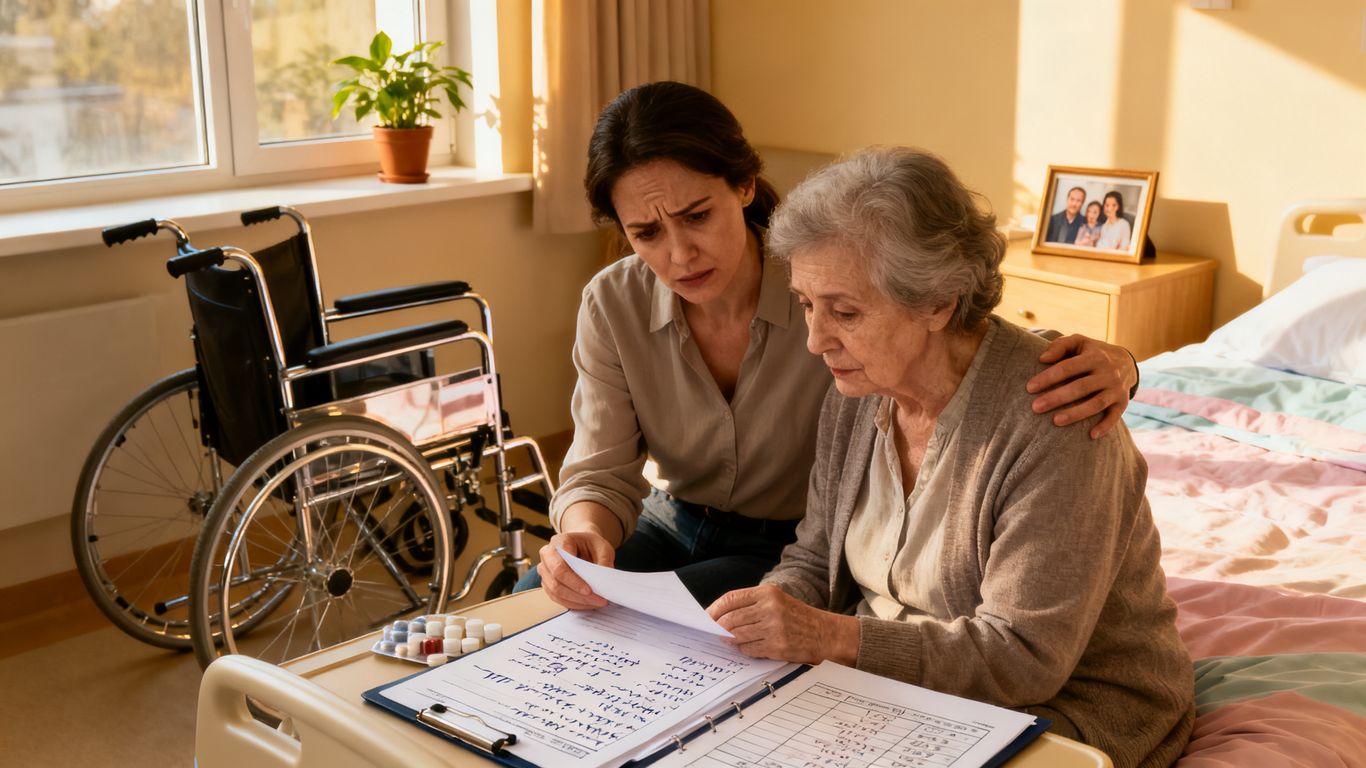
Nursing home neglect can be difficult to recognize because a resident’s health may already be fragile. Still, a facility has responsibilities that do not disappear because a person is elderly, disabled, or unable to speak for themselves. When a failure to provide required care causes injury or worsens a condition, the resident or family may have grounds to investigate a legal claim.
What nursing home neglect means under the law
Nursing home neglect generally involves failing to provide a resident with reasonable care, supervision, treatment, or basic services. The legal standard depends on the facts and the state involved, including the facility’s promises, applicable regulations, and the resident’s care plan. A family can review what nursing home neglect may look like when trying to distinguish ordinary discomfort from a serious care failure.
The central questions are often whether the facility owed a duty, whether it breached that duty, and whether the breach contributed to harm. A missed meal alone may not establish a lawsuit, but repeated missed meals followed by dehydration or dangerous weight loss may warrant closer legal review.
How neglect differs from intentional elder abuse
Intentional abuse involves purposeful conduct, such as hitting, threatening, humiliating, or improperly restraining a resident. Neglect more often results from inattention, inadequate staffing, poor training, or a failure to follow an established care plan. The absence of intent does not necessarily excuse harmful care.
Both conduct types can cause physical and emotional injury, and they may occur together. Residents retain their rights to dignity and respectful treatment even when they need extensive assistance, a point also reflected in resources about residents’ rights and dignity.
Common forms of neglect, including medical, nutritional, and personal care failures
Neglect may involve failing to monitor a medical condition, obtain needed treatment, provide prescribed medication, or respond to a change in symptoms. Nutritional neglect can include inadequate food, water, feeding assistance, or monitoring for swallowing problems. Personal care failures may leave a resident unwashed, in soiled clothing, or exposed to preventable pressure injuries.
Other examples include leaving a resident without necessary supervision, failing to reposition someone who cannot move independently, and ignoring requests for help. The legal significance depends on the resident’s needs, the facility’s obligations, the duration of the failure, and the resulting harm.
When poor care may amount to negligence or a violation of regulations
A regulation violation can be meaningful evidence, but it does not automatically prove that a resident is entitled to damages. A negligence claim usually requires a connection between the unacceptable care and an injury, illness, pain, or other compensable loss. Medical records and testimony often help establish that connection.
Some cases involve several small failures rather than one dramatic event. A delayed response, incomplete charting, and failure to notify a physician may together show a pattern that allowed a preventable condition to worsen.
Who may be legally responsible for the harm
Potentially responsible parties can include the facility operator, a management company, individual employees, contractors, or another entity responsible for medical services. The appropriate defendants depend on contracts, employment relationships, corporate structure, and the facts surrounding the injury. A resident’s own actions or underlying illness may also become part of the causation analysis without eliminating the facility’s duties.
An attorney can trace who made decisions, who controlled staffing and policies, and who had notice of the resident’s needs. That investigation matters because the name on the building may not be the only legally relevant entity.
Recognizing signs that a resident may be neglected
Families often notice changes before a formal record shows a problem. One isolated concern may have an innocent explanation, but several changes close together deserve prompt questions and documentation. A careful review of health, behavior, hygiene, and the living environment can reveal whether the concern is ongoing.
Physical warning signs and unexplained injuries
Unexplained bruises, cuts, burns, falls, pressure sores, dehydration, and sudden infections may indicate that a resident did not receive appropriate supervision or care. Repeated injuries, vague explanations, or delays in notifying family members deserve particular attention. A resident who cannot reliably describe what happened may need an independent medical assessment.
The family should ask when the injury was discovered, who responded, what treatment was provided, and whether an incident report exists. Those questions can identify gaps between the event, the facility’s response, and the explanation later given to relatives.
Changes in behavior, hygiene, weight, or mobility
Withdrawal, fear around particular caregivers, agitation, unusual sleepiness, or reluctance to speak can signal distress, although these changes can also arise from illness or medication. Poor hygiene, unwashed bedding, soiled clothing, rapid weight loss, and a decline in mobility may point to unmet daily needs. Comparing the resident’s current condition with earlier records and family observations can make gradual deterioration easier to see.
A family journal should use dates and concrete descriptions rather than conclusions. “Skipped lunch and appeared unusually weak on August 27” is more useful than a general statement that the resident “seems neglected.”
Medication errors, missed treatment, and untreated medical conditions
Missed doses, incorrect medications, unexplained sedation, and repeated pharmacy issues can place a resident at risk. So can failure to follow wound-care instructions, obtain ordered tests, schedule specialist care, or report a significant change to a physician. The resident’s medication administration record and treatment notes may help clarify what was ordered and what actually occurred.
A family should not change prescription instructions without medical guidance. Instead, it should ask the treating clinician to review the resident’s condition and document any suspected error or delay.
Environmental hazards and unsafe facility conditions
Blocked walkways, wet floors, broken equipment, inadequate lighting, extreme temperatures, and poorly maintained bathrooms can create preventable risks. A resident who depends on a walker, wheelchair, bed rail, or call system may be especially vulnerable when those supports are unavailable or defective. Photographs should show the condition clearly while preserving the date and location.
Environmental evidence is strongest when connected to a known resident need. For example, a broken call device matters more when staff records show that the resident required assistance with toileting or transfers.
Records or staff statements that may indicate a pattern of neglect
Care notes, complaint logs, staffing records, and changes in the resident’s condition may reveal recurring failures. Statements from current or former employees can also provide context, although they should be preserved accurately and lawfully. Resources explaining when delayed responses may constitute neglect can help families frame questions about call lights and essential care.
A pattern does not require identical incidents every time. Repeated delays, missing documentation, inconsistent explanations, or several residents experiencing similar problems may all justify further investigation.
Building evidence for a nursing home neglect claim
Evidence should show more than that a resident became ill or suffered an injury. It should help explain what care was expected, what happened instead, and how the difference affected the resident. Families can preserve useful information while the events are still recent and memories remain clear.
Obtaining medical records, care plans, and incident reports
The resident or authorized representative can request medical records, medication records, care plans, nursing notes, therapy records, physician orders, and incident reports. The records should be reviewed for both omissions and inconsistencies. A care plan is particularly useful because it may identify the assistance, monitoring, repositioning, diet, or treatment the resident was supposed to receive.
Requests should be made in writing and retained with proof of delivery. If the facility refuses to provide records or produces an incomplete set, an attorney can assess the next step under applicable law.
Documenting injuries, symptoms, expenses, and changes over time
A dated log can connect symptoms and care failures to medical consequences. It should include appointments, hospital visits, medications, transportation, lost income for family caregivers, and other expenses. Photographs should be paired with notes describing when and where they were taken and who observed the condition.
A compact record of the most useful information may include:
- The date and description of each suspected failure
- The resident’s symptoms, injury, or change in functioning
- Names of staff members and witnesses who were present
- Calls, complaints, responses, and promised corrective action
- Medical treatment, expenses, and resulting limitations
This information does not replace medical or legal proof, but it gives counsel a reliable starting point. It can also reveal whether the condition improved after a change in staff, treatment, or facility.
Identifying witnesses, caregivers, and potential expert testimony
Witnesses may include relatives, visitors, roommates, aides, nurses, physicians, therapists, and emergency responders. Their value depends on what they personally saw, heard, recorded, or did. An expert may later explain the appropriate standard of care, the cause of an injury, or the resident’s future treatment needs.
Families should avoid coaching witnesses or asking them to speculate. A simple request for a factual account, preserved in the witness’s own words, is usually more useful.
Preserving photographs, communications, and facility correspondence
Text messages, emails, portal messages, letters, voicemail recordings, and written complaints may show notice and response. Original files should be preserved rather than edited, and screenshots should include dates or surrounding context when possible. The family should also save bills, discharge instructions, and correspondence with insurers.
A consistent file structure can prevent important material from becoming scattered. Copies should be kept in a secure location outside the facility, particularly if the resident may be moved.
Using inspection reports and regulatory findings carefully
State inspection reports and federal records can identify citations, corrective plans, and earlier complaints. They may support an argument that the facility knew about a risk or repeatedly failed to correct it. They do not, by themselves, prove that the facility caused a particular resident’s injury.
Counsel will usually compare regulatory findings with the resident’s records and timeline. That careful comparison is more persuasive than treating every citation as conclusive evidence.
Taking action before filing a lawsuit
A lawsuit is not always the first step, especially when a resident remains in danger. Immediate safety and medical treatment come before preserving a legal theory. Once the resident is stable, the family can make complaints, collect records, and seek advice without unnecessarily alerting others to every part of the investigation.
Reporting immediate danger and arranging emergency medical care
If the resident faces an immediate threat, the family should call emergency services or obtain urgent medical care. A physician or hospital can evaluate injuries, dehydration, infection, medication effects, or other conditions that require prompt attention. Medical personnel should receive a clear account of what the family observed and when.
The family should not delay emergency treatment while trying to photograph a room or obtain facility records. Safety may also require asking the facility to separate the resident from a particular caregiver or to implement temporary precautions.
Filing complaints with the nursing home and regulatory agencies
Complaints should identify dates, staff responses, observed conditions, and the relief requested. Written complaints create a record and make it easier to determine whether the facility investigated or corrected the issue. Depending on the state, a family may also contact a licensing agency, health department, long-term-care ombudsman, or law enforcement.
A complaint can be appropriate even when the family is not yet certain that a lawsuit exists. Reporting a concern may protect the resident and other residents while the facts are being evaluated.
Moving the resident or changing the care plan when necessary
A transfer may be necessary if the facility cannot provide safe care or if the resident fears retaliation. Before moving, the family should request copies of records, medication information, and the current care plan when feasible. The receiving provider should be told about known injuries, missed treatment, allergies, and suspected medication problems.
A change in location does not erase the claim, but it can affect access to witnesses and physical evidence. Legal counsel can help preserve information while the resident’s care needs are addressed.
Avoiding statements or agreements that could affect the claim
Families should be cautious about signing releases, settlement forms, arbitration documents, or broad admissions before understanding their effect. Communications with the facility should remain factual and focused on the resident’s safety. Social media posts, angry messages, or speculation about fault can later create confusion.
This does not mean the family should stop communicating. It means important communications should be accurate, measured, and preserved.
Consulting an attorney about the investigation and legal strategy
An attorney can evaluate records, identify missing evidence, send preservation requests, and explain whether a claim may involve negligence, medical malpractice, elder law, or wrongful death. Early advice may also shape how the family communicates with the facility and insurers. A consultation does not require the family to file immediately.
The family may wish to organize a short timeline and bring the resident’s records, photographs, bills, and written complaints. That preparation helps counsel understand both the medical course and the practical concerns.
How a nursing home neglect lawsuit works
A nursing home neglect case usually develops through investigation, pleadings, evidence exchange, negotiations, and—if necessary—trial. The process can be emotionally demanding because it may require the resident to revisit painful events. A lawyer can explain each stage and identify decisions that require the resident’s or family’s approval.
Evaluating liability, causation, and available insurance coverage
Counsel first examines whether the facility or another defendant owed a duty and failed to meet it. The analysis then turns to causation: whether the failure probably caused or worsened the injury. Insurance policies, indemnity agreements, and the defendant’s financial structure may affect how recovery is pursued.
An existing illness does not automatically defeat a claim. The issue may be whether inadequate care aggravated that illness, delayed treatment, or reduced the resident’s chance of recovery.
Identifying the proper defendants and filing the complaint
The complaint identifies the parties, describes the alleged failures, and states the damages sought. The correct defendants may include a corporate owner, management entity, staffing company, medical provider, or individual professional. Naming the wrong entity can create delay, so counsel generally investigates ownership and contracts before filing.
The defendant then receives formal notice and an opportunity to respond. The court may set deadlines for motions, discovery, mediation, and other steps.
Responding to arbitration agreements and other facility contracts
Admission paperwork may contain arbitration provisions, releases, consent forms, or limitations affecting the dispute. Their enforceability depends on the wording, the signer’s authority, the circumstances of signing, and applicable law. A family should provide all facility contracts to counsel rather than assuming that one signature ends the possibility of court proceedings.
An attorney may challenge an agreement, negotiate its application, or advise that arbitration is likely to proceed. The contract issue is separate from whether the underlying care was acceptable.
Handling discovery, depositions, and medical evaluations
During discovery, each side requests records, answers written questions, and identifies witnesses. Depositions allow attorneys to question family members, employees, administrators, and medical professionals under oath. The resident may also undergo a medical evaluation if the defense disputes the nature or cause of the injury.
Preparation focuses on truthful, concrete answers and a clear understanding of the records. A witness should say when they do not remember rather than guess.
Understanding settlement negotiations, mediation, and trial
Many cases are resolved through negotiation or mediation, where a neutral person helps the parties assess settlement. A settlement should account for medical expenses, future care, non-economic harm, liens, fees, and the resident’s wishes. If no acceptable agreement is reached, the case may proceed to trial.
At trial, the plaintiff must present evidence supporting liability, causation, and damages. The decision may be made by a judge or jury, depending on the claim and jurisdiction.
Compensation available in a neglect claim
Damages depend on the resident’s injuries, the strength of the evidence, and state law. A claim may seek economic losses as well as compensation for harm that cannot be captured by a bill. The available recovery can also change if the resident dies or if other parties contributed to payment.
Medical treatment, rehabilitation, and future care costs
Recoverable economic damages may include hospital care, physician visits, medications, rehabilitation, equipment, transportation, and necessary future services. Records should show which expenses were caused by the suspected neglect rather than by the resident’s preexisting condition. A life-care or medical expert may help estimate continuing needs.
Families should keep itemized bills and insurance explanations. Even expenses initially paid by insurance may remain relevant to the damages analysis.
Compensation for pain, emotional distress, and loss of dignity
A resident may experience pain, anxiety, fear, humiliation, loss of independence, or distress after inadequate care. Non-economic damages can address these effects when permitted by state law. Testimony from the resident, family, caregivers, and treating professionals may help describe changes that do not appear on a bill.
The resident’s dignity matters independently of financial loss. A failure to provide basic hygiene or respectful assistance can be significant even when the physical injury is limited.
Wrongful death damages when neglect results in a resident’s death
When neglect contributes to a resident’s death, eligible survivors or the estate may pursue a wrongful death or survival claim. Possible damages vary and may include medical and funeral expenses, lost support, the resident’s pre-death suffering, or the loss of companionship. The applicable statute determines who may file and what damages are available.
The cause of death must be examined carefully, particularly when the resident had several serious conditions. Medical records, death certificates, expert opinions, and the timeline of care may all be relevant.
Punitive damages for especially reckless or malicious conduct
Punitive damages are generally reserved for conduct more blameworthy than ordinary negligence. Depending on state law, the evidence may need to show willful disregard, oppression, fraud, or conscious indifference to a known risk. They are not available in every neglect case.
Repeated concealment, falsification, or disregard of an obvious danger may receive closer scrutiny than an isolated mistake. Counsel can explain the required standard and whether the evidence could support such a request.
How prior payments and insurance may affect recovery
Health insurance, Medicaid, Medicare, private policies, settlements, and other payments may create reimbursement claims or liens. The amount recovered may therefore differ from the headline award or settlement. Attorneys commonly review lien notices and payment records before funds are distributed.
The family should disclose all known payments and avoid signing a final release without understanding what claims and liens it addresses. Careful accounting helps prevent a later dispute over the recovery.
Deadlines, legal costs, and choosing a nursing home neglect attorney
A strong claim can still be lost if it is filed too late or against the wrong party. Deadlines may be complicated by the resident’s death, government involvement, medical malpractice rules, or required notices. Families should seek advice early rather than relying on a general internet deadline.
How statutes of limitation and notice requirements vary by state
Statutes of limitation set the period for filing a lawsuit, while some laws require advance notice to a public facility or governmental entity. The clock may begin on the injury date, the discovery date, or another legally defined event. Exceptions can exist, but they are narrow and fact dependent.
A family should identify the state where the care occurred, when the injury was discovered, and whether the facility or provider has a public connection. Those details help counsel calculate the risks more accurately.
What to ask during an initial attorney consultation
The family can ask whether the attorney handles nursing home neglect matters, who would work on the case, and what similar issues the firm has evaluated. It can also ask about likely defendants, evidence needed, possible defenses, deadlines, and communication practices. A clear explanation is more useful than a promise about the result.
The consultation should include the resident’s care plan, medical records, incident information, photographs, facility correspondence, and a chronology. Counsel can then distinguish missing facts from facts that already support investigation.
Contingency fees, litigation expenses, and potential out-of-pocket costs
Many injury attorneys work under a contingency arrangement, meaning the fee is tied to a recovery rather than paid entirely upfront. The written agreement should explain the percentage, case expenses, expert fees, filing charges, records costs, and what happens if there is no recovery. Some matters involve expenses that the client may need to advance.
Before signing, the family should ask for plain-language answers about fees and costs. It should also learn whether the agreement changes if the matter settles before filing or proceeds through trial.
Situations that may require elder law, medical malpractice, or wrongful death experience
Some cases overlap with elder law issues involving guardianship, benefits, capacity, facility transfers, or resident rights. Others require medical malpractice experience because a physician, nurse, or treatment decision is central to the claim. A death may require counsel familiar with wrongful death procedure and estate administration.
The best fit depends on the facts, not just the label used for the case. A firm may need to coordinate with another specialist when the resident’s legal, medical, and financial concerns extend beyond one area.
Why prompt legal advice matters when evidence or deadlines may be at risk
Records can be amended, surveillance footage can be overwritten, rooms can change, and employees can leave. Delay may also shorten the time available to send notices, interview witnesses, or obtain an expert review. Prompt advice helps preserve options while the resident’s immediate care remains the first concern.
Families do not need to know every answer before calling an attorney. A timely review of the available facts can clarify what should be preserved, what should be reported, and whether a nursing home neglect claim is worth pursuing.
