
The landscape of deception detection in Britain has seen significant shifts in recent times. Landmark legislation, such as the Domestic Abuse Act 2021, has brought the technology back into sharp focus for professionals and the public alike.
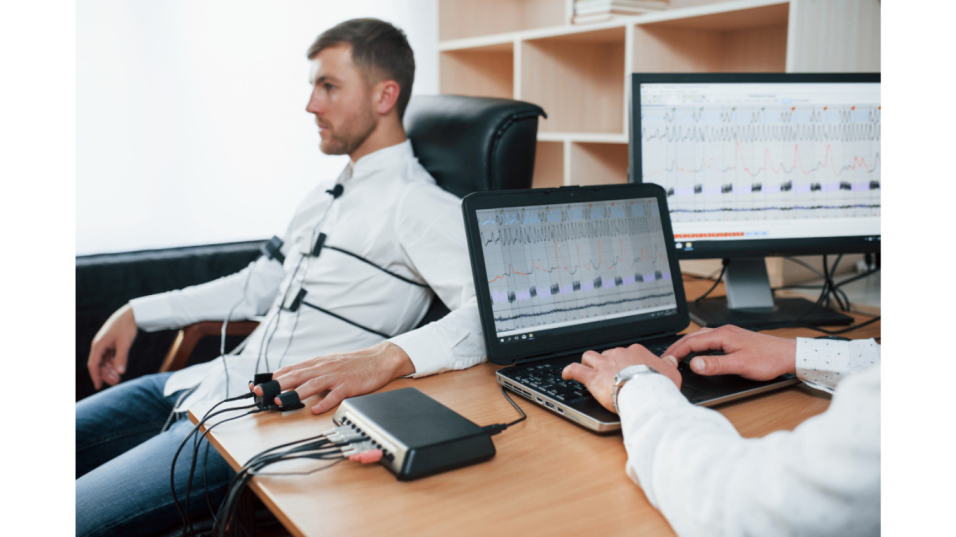
Often termed a lie detector, this method records physiological signals. It measures changes in blood pressure, pulse, breathing, and skin conductivity during an examination.
Understanding the validity, dependability, and lawful application of these tools is now crucial. It matters to legal practitioners, investigators managing offenders, and anyone following criminal justice developments.
This article provides a balanced, evidence-based analysis. It will explore the scientific foundations of the process and its admissibility in various settings. Government policy, practical uses in risk management, and the ongoing ethical debate will also be covered.
The discussion acknowledges a core tension. Technological advancement in identifying deceit continues to evolve, yet scientific scepticism about its overall validity remains.
Key Takeaways
- Recent legislation has increased the relevance of deception detection technology within the British justice system.
- The procedure works by monitoring a subject’s involuntary physical responses to questioning.
- A clear grasp of its strengths and limitations is essential for professionals in related fields.
- The forthcoming analysis will cover scientific, legal, and ethical perspectives in detail.
- There is an ongoing debate between the technology’s proponents and its scientific critics.
- The article aims to deliver factual insight, moving beyond sensationalised claims.
Introduction to Polygraph Testing in the UK
In 1921, a groundbreaking invention aimed to measure the body’s hidden signals of deceit, pioneering modern deception detection. Medical student John Augustus Larson and police officer Leonard Keeler built the first device. Their work was based on the idea that lying causes specific physiological changes.
Historical Background of Lie Detection
Early applications were in American law enforcement and intelligence. The machine was used to probe serious crimes like theft, fraud, and espionage. For decades, its use remained largely confined to these fields.
Britain took a cautious view. In 1981, the Royal Commission on Criminal Procedure examined its potential for England and Wales. Members visited the United States to observe the technology in action.
Their conclusion was that the polygraph’s “lack of certainty from an evidential point of view told against its introduction in this country for the purpose of court proceedings.”
Modern Applications in Investigations
The tool’s role has since evolved. It transitioned from a criminal inquiry instrument to a risk management one. Today, it is employed primarily in the supervision of high-risk offenders released on licence.
Mandatory polygraph testing programmes, established under legislation like the Offender Management Act 2007, represent its current mainstay. This shift highlights a century-long journey from initial rejection to a specific, controlled application in modern investigations.
UK Polygraph Tests: Accuracy, Reliability & Legal Use in Investigations
Evaluating the efficacy of these examinations requires a three-part analysis. Professionals must consider statistical claims, scientific robustness, and strictly permitted applications.
Industry studies often cite high success rates. For instance, one comprehensive review indicated an approximate 80-90% accuracy in detecting deception.
Yet, this figure is not definitive. Its validity can be influenced by the testing environment, question format, and the subject’s personal characteristics.
Major scientific bodies express deep scepticism about fundamental dependability. A landmark 2003 report offered a sobering perspective.
“The inherent ambiguity of the physiological measures used in the polygraph suggest that further investments in improving polygraph technique and interpretation will bring only modest improvements in accuracy.”
Factors like anxiety, medical conditions, or a person’s belief system can confound the results. This creates an inherent challenge for clear interpretation.
Within Britain, the lawful framework is precise. Outcomes from these procedures are inadmissible as evidence in criminal courts.
Their primary application is in public protection. This includes the mandatory supervision of high-risk individuals released on licence.
Some police forces also offer voluntary testing during certain probes. The practical value of the tool, therefore, lies at the intersection of its claimed precision, known scientific limits, and this specific legal authorisation.
Scientific Basis and Testing Techniques
Deception detection technology functions by monitoring a suite of autonomic nervous system signals. These are involuntary reactions linked to stress.
The core scientific premise suggests that telling an untruth can trigger measurable physiological changes. Examiners record these using specialised equipment.
Physiological Measures Explained
Sensors are attached to the subject’s body. A blood pressure cuff on the upper arm tracks cardiovascular activity.
Respiratory patterns are captured by pneumographs around the chest. Electrodes on the fingers measure sweat gland activity, known as galvanic skin response.
Together, these instruments log fluctuations in pulse, breathing depth, and skin conductivity. The data forms a graph of bodily reactions during questioning.
Technological Advances in Deception Detection
Modern techniques extend beyond traditional equipment. Researchers now explore functional MRI to map brain activity associated with deceit.
Other methods include eye-tracking for visual avoidance and voice stress analysis. Computer algorithms are also being developed to analyse linguistic cues for dishonesty.
These new tools aim to supplement or refine older detection approaches. The fundamental challenge remains: distinguishing deception from general anxiety or fear.
Legal Framework and Admissibility in UK Courts
A clear statutory prohibition prevents the use of polygraph results in criminal proceedings across England and Wales. The legal system maintains a firm stance against relying on these examinations for evidential purposes.
This position is rooted in historic case law. In Fennell v. Jerome Property Maintenance Ltd (1986), the court held that evidence from mechanically induced veracity tests is inadmissible.
This precedent was later codified. Section 30 of the Offender Management Act 2007 explicitly forbids using results from such sessions, statements, or physiological reactions in any criminal proceedings.
Courtroom Challenges and Evidence Validity
Practice Direction 19A.1 of the Criminal Procedure Rules governs expert evidence. It must be relevant, necessary, and from a competent witness.
The procedure often fails this test. In R v. Dlugosz (2013), the Court of Appeal emphasised the need for a sufficiently reliable scientific basis.
Even in the United States, where the technique is more common, courts generally exclude such evidence. For investigators, this means outcomes cannot form part of a prosecution case.
| Provision/Case | Year | Key Principle |
|---|---|---|
| Fennell v. Jerome Property Maintenance Ltd | 1986 | Mechanically induced veracity tests are inadmissible as evidence. |
| Practice Direction 19A.1 | Ongoing | Expert evidence must meet strict relevance and reliability criteria. |
| R v. Dlugosz | 2013 | Novel scientific techniques require a demonstrably reliable basis. |
| Section 30, Offender Management Act | 2007 | Polygraph results are prohibited from use in criminal proceedings. |
Polygraph Use in Criminal Investigations
Despite its presence in some forces, the integration of veracity assessment into criminal enquiries faces strong institutional opposition.
Integration with Investigative Processes
A 2014 ACPO statement strongly discouraged this practice. It highlighted significant risks to an enquiry’s integrity and any subsequent prosecution.
If employed, its use must be revealed to the Crown Prosecution Service. This information is then likely disclosed to the defence, potentially undermining the case.
“There are no typical cues to deceit, either through non-verbal behaviour, verbal behaviour, or physiology that can be used within the UK criminal justice system to accurately and consistently discriminate between lies and truth.”
The guidance outlined three risky scenarios. Eliminating a suspect based on ‘passing’ can make the whole investigation appear flawed.
Pursuing someone who ‘fails’ suggests confirmation bias. Dismissing a victim’s account deemed deceptive could wrongly end an enquiry.
Some forces, like Hertfordshire, nonetheless offer voluntary testing. Here, the polygraph serves as an intelligence-gathering tool, not an evidential foundation.
Role of Polygraph Testing in Risk Management and Offender Supervision
Within the sphere of public protection, a specific application of veracity assessment has become a cornerstone of offender management. Its primary contemporary function is not criminal investigation but rather the supervision of high-risk individuals released on licence.
Mandatory Testing for High-Risk Offenders
Compulsory examinations are imposed on offenders meeting strict criteria. They must be aged 18 or over and assessed as very high or high risk of serious harm.
Qualifying offences include murder, specified violent offences, breach of a restraining order involving domestic abuse, and controlling or coercive behaviour. The individual must also have been sentenced to custody of 12 months or more.
| Eligibility Criteria | Requirement |
|---|---|
| Age | 18 years or older |
| Risk Assessment | Very high or high risk of serious harm |
| Qualifying Offence | Murder, specified violence, domestic abuse breaches |
| Sentence Length | 12 months custody or more |
Impact on Licence Conditions
Failing a test does not alone trigger recall to custody. However, disclosures made during the session that reveal licence breaches or escalated risk can lead to recall.
Consequences for unsatisfactory results include increased testing frequency, formal warnings, or additional licence conditions. Information gathered may be shared with police for further investigation.
Refusing to take the test or attempting to “trick” it can result in recall. This raises questions about how such attempts are identified with certainty.
Government Policies and Legislative Developments
Policy governing the application of this technology has developed incrementally, shaped by pilot studies and parliamentary scrutiny.
The foundational law was the Offender Management Act 2007. Sections 28-30 enabled mandatory testing for sexual offenders on licence. Implementation was delayed for a pilot programme.
This initial study ran from April 2009 to October 2011 in the East and West Midlands. Its findings convinced policymakers to proceed with a national rollout from January 2014.
A major expansion came with the Domestic Abuse Act 2021. Section 76 amended the 2007 Act to include high-risk domestic abuse perpetrators.
On 4 July 2021, the Ministry of Justice began a three-year pilot in four probation regions. This applies mandatory polygraph examinations to eligible offenders for the first time.
The government’s policy emphasises evidence-based evaluation. An independent report will be laid before Parliament to inform any wider use.
This expansion occurs alongside ongoing scepticism. Westminster committees, including the House of Lords Science and Technology Committee, have questioned the scientific basis.
Criticisms and Limitations of Polygraph Technology
Authoritative scientific bodies have consistently raised fundamental doubts about the core principles of deception detection technology. Their critiques form a substantial challenge to its perceived reliability.
Scientific Critiques and Reliability Concerns
The British Psychological Society highlights a core issue. The equipment records several bodily signals that “do not reflect a single underlying process”.
These measurements may not align with each other, even within the same person. This questions the fundamental validity of the method.
Physiological reactions can be triggered by many factors. Anxiety, general stress, or fear of the procedure itself can mimic signs of deception.
This creates a major confounding variable. A person’s nervousness does not prove dishonesty.
Furthermore, the test is vulnerable to deliberate manipulation. Evidence shows people can learn to control their responses.
The case of Floyd “Buzz” Fay is instructive. Wrongly convicted using this scientific evidence, he later taught others to produce false negatives.
“The very research programme in psychology (introspection) which propelled the polygraph into existence has been widely discredited as unscientific due to its lack of methodology, indefensible empirical basis and deficient validity.”
SAGE Journal, 2020
Proponents often cite high accuracy rates. Yet, these figures depend heavily on the examiner’s skill and the specific questions asked.
A broad screening study yields different results than a focused exam. This variability undermines claims of consistent reliability.
Ultimately, the scientific evidence for a direct link between physiology and deception remains contested. This casts a long shadow over the technique’s validity.
Ethical and Professional Considerations
Professional standards for those conducting deception detection are a critical, yet often overlooked, component. The ethical framework raises questions about informed consent, especially during supposedly voluntary police procedures. Examiners carry a significant responsibility, knowing the technology’s limitations while influencing outcomes through their demeanour and question formulation.
Standards in Examiner Training
Probation officers undergo a rigorous 12-week programme to become accredited examiners. This training is delivered by Behavioural Measures, led by Professor Don Grubin. It aligns with American Polygraph Association standards and involves intensive learning with regular assessments.
The curriculum covers specialised components like post-conviction sex offender protocols. Investment in this knowledge is substantial. South Yorkshire Police initially budgeted £35,000 per officer for training in Texas before opting for the UK-based course.
A key ethical concern is whether examiners are encouraged to overstate the machine’s reliability. This could intimidate a person into making disclosures before the test even begins. Researchers call this the “polygraph effect”, where belief in the technology’s power drives behaviour more than the testing itself.
Comparative Perspectives: UK vs US Polygraph Practices
When comparing international approaches to deception detection, the practices in the United States and Britain reveal both contrasts and surprising similarities. Media portrayals often exaggerate American reliance on these machines during criminal probes.
The U.S. Supreme Court has ruled such evidence is generally inadmissible in criminal trials. This mirrors the British position, citing insufficient scientific reliability.
Variation exists across American states. Some jurisdictions permit polygraph evidence if both parties agree or to challenge a witness’s credibility.
In the US, the procedure finds broader use in administrative hearings, civil cases, and parole reviews. Federal agencies also employ it for security clearance testing.
American sex offender management programmes widely adopt the technique. Research indicates nearly 80% of community programmes use polygraph methods.
Britain has adopted similar risk management applications from US experience. However, it maintains a stricter prohibition on using test results as criminal proof.
| Aspect | United Kingdom | United States |
|---|---|---|
| Admissibility in Criminal Trials | Statutorily prohibited | Generally inadmissible (federal) |
| Primary Statutory Application | Offender supervision on licence | Probation/parole, federal employment screening |
| Use in Sex Offender Management | Mandatory for high-risk cohorts | Extremely widespread in treatment programmes |
| Federal Agency Screening | Not used | Common for security clearances |
Impact on the Criminal Justice System and Public Confidence
The political narrative surrounding deception detection often emphasises its role in creating a tougher regime for high-risk individuals. This shapes its impact on the criminal justice system and public trust. Former minister Jeremy Wright described the polygraph as “a new weapon” to manage sex offenders.
This framing positions the use of such testing as a demonstration of proactive crime prevention. It aims to enhance public safety perceptions beyond individual cases.
However, this approach may prioritise political messaging over scientific evidence. Public confidence could be based on an inflated belief in the technology’s power.
Resource allocation raises further questions. Funds dedicated to polygraph programmes might be diverted from other proven methods part of offender supervision.
| Aspect | Potential Impact | Consideration |
|---|---|---|
| Public Trust | May create false confidence | Relies on perceived technological efficacy |
| Resource Use | Diverts funds from other programmes | Opportunity cost for probation services |
| Supervisory Relationship | Can foster adversarial dynamics | Potentially undermines rehabilitation |
| Policy Drivers | Political appeal over evidence | Risk of policy-based evidence making |
Ultimately, the value of such measures must be weighed against their actual contribution to reducing reoffending. Evidence-based assessment should guide policy within the criminal justice system.
Innovations and Future Developments in Deception Detection
Beyond measuring heart rate and sweat, new frontiers in identifying dishonesty are emerging from neuroscience and computing. These techniques aim to find more direct signals of deception.
Functional MRI scans map brain activity by tracking blood flow. Research suggests telling lies may activate different neural patterns. Eye-tracking technology analyses gaze and pupil dilation, based on links between avoidance behaviours and deceit.
Other methods examine the voice. Software analyses changes in pitch and tone for stress markers. More advanced systems use machine learning.
Computer algorithms scan language for subtle cues in word choice. They look for patterns that might correlate with truthfulness.
All these emerging tools remain in early development. They are not used in legal settings. Experts caution they face similar validity challenges as the traditional polygraph.
Their future role is likely as supplementary aids. They cannot provide definitive proof of guilt or innocence on their own.
Case Studies and Real-World Applications
Concrete examples offer the clearest insight into how veracity assessment operates within offender management programmes. Published case files demonstrate its role in identifying breaches of licence conditions.
Consider a 47-year-old man convicted of sexually abusing boys. His licence barred contact with children under 18.
During a polygraph session, he denied any contact. The equipment returned a significant result.
Police visited his home and found three young boys present. He was recalled to custody immediately.
Another case involved a 33-year-old man convicted of downloading illegal images. He was banned from possessing internet-enabled devices.
In his test, he admitted having his mother’s laptop but denied other gadgets. This denial triggered a notable physiological response.
The examiner shared this information with the probation practitioner. A police search was coordinated.
Officers discovered numerous phones, a laptop, and USB sticks containing indecent images. This led to his recall and new charges.
“There have been a significant number of cases where information gained through polygraph testing has led to children and vulnerable people being safeguarded.”
Detective Chief Inspector Jude Holmes, Greater Manchester Police
| Case Reference | Qualifying Offence | Polygraph Focus | Outcome |
|---|---|---|---|
| Case J | Sexual abuse of children | Contact with minors | Recall after children found at residence |
| Case C | Downloading indecent images | Possession of internet devices | Recall and new charges after devices seized |
These cases show how test results can prompt timely investigation. They highlight a practical application in public protection.
It is important to note these are published examples. They may not represent all polygraph outcomes.
Collaborative Investigations with Expedite Detective Agency
The decision to incorporate a physiological credibility assessment into a private enquiry requires careful navigation. Professional detective agencies often work alongside solicitors and probation services.
This collaboration ensures any consideration of a polygraph aligns with strict ethical and legal frameworks. Agencies understand the technology’s significant limitations.
When clients request such a procedure, a reputable firm provides grounded guidance. They explain what the use of a polygraph can and cannot achieve.
A core message is its legal inadmissibility as court evidence. The test result itself holds no evidential weight. Any information gained may inform further lines of enquiry.
In certain private matters, a voluntary use polygraph session might be appropriate. This includes internal corporate investigations or sensitive family disputes.
Reputable agencies prioritise evidence-based methodologies. They do not promote the polygraph as a definitive truth mechanism.
Clear communication with all parties is essential. Professionals ensure clients and their legal advisers understand the tool’s role.
Staying informed about current research is a professional duty. This counters misconceptions often shown in media portrayals.
| Type of Enquiry | Potential for Polygraph | Professional Guidance |
|---|---|---|
| Employment Dispute | Voluntary basis only | Highlight non-evidential status; suggest alternative fact-finding. |
| Internal Corporate Matter | May be a tool for gathering leads | Stress the need for full participant consent and clear purpose. |
| Family Law Case | Rarely appropriate | Advise on its likely inflammatory effect and limited utility. |
Organisations such as Expedite Detective Agency work within these principles. They provide accurate, ethical counsel based on realistic expectations of the technology.
Expert Opinions and External Evaluations
To move beyond theory, one must examine both the data from formal pilots and the grounded perspectives of those who apply the technology. This dual approach reveals how a tool functions in practice.
Insights from EX-DA Professionals
Seasoned investigators from firms like EX-DA offer a practical review. They see the procedure as a potential interview aid, not a truth machine.
Their experience highlights a key limitation. The test results cannot form legal evidence. It may, however, prompt lines of enquiry in complex investigations.
Independent Evaluation Findings
A major study by the University of Kent evaluated an early pilot. It found polygraph testing increased disclosures relevant to risk management.
Critically, many offenders confessed because they “believed so strongly in the powers of the polygraph”. Numerous revelations happened in pre-test interviews, before any measurement.
Since 2014, over 7,000 such tests with sexual offenders have occurred. Authorities report two-thirds yielded significant disclosures.
A new domestic abuse pilot is under review. The Cambridge Centre for Evidence-Based Policing will assess its impact and cost.
This raises a fundamental question. Is the disclosed information due to the machine’s power, or the subject’s belief in it? This “polygraph effect” challenges what is truly being measured.
| Evaluation Focus | Key Result | Notable Insight |
|---|---|---|
| University of Kent Pilot (2009-2011) | Increased management-relevant disclosures | Disclosures often driven by belief in the technology, not the test itself. |
| National Programme (Post-2014) | ~66% of 7,000+ tests produced significant disclosures | High volume of information gathered for offender supervision. |
| Domestic Abuse Pilot (Ongoing) | Impact and economic evaluation in progress | Process being analysed by Ministry of Justice analysts. |
Public Perception and Media Portrayals
Television and film have created a powerful, yet misleading, narrative around deception detection technology. Public understanding is heavily shaped by dramatic portrayals, from daytime shows to crime series.
This media influence fosters significant misconceptions about the machine’s real capabilities and applications.
Influence of Television and News Coverage
Programmes like Jeremy Kyle and Love Island present the procedure as a definitive truth-revelation device. Countless police procedurals show investigators solving cases by “whipping out their lie detector kit”.
This creates an expectation of instant, conclusive results. The reality is far more complex and scientifically contested.
Sensationalised news coverage of cases where the examination identified risks can amplify this perception. It may suggest the technology is more reliable than evidence supports.
| Media Portrayal | Scientific Reality |
|---|---|
| Definitive proof of guilt or innocence | Inconclusive indicator of physiological arousal |
| Routine use in criminal investigations | Primarily a risk management tool in offender supervision |
| Machine cannot be deceived | Vulnerable to countermeasures and anxiety effects |
“The dramatic licence taken by television writers has embedded a myth of infallibility in the public consciousness, far removed from the cautious stance of the scientific community.”
Interestingly, this media-driven belief can enhance the tool’s effectiveness in certain contexts. A person who believes the machine cannot be fooled may be more likely to make disclosures.
This “polygraph effect” relies on perception, not the test itself. The gap between public fascination and professional scepticism remains wide.
Advanced deception detection techniques are, for now, likely to remain the stuff of television dramas. They are subjects of expensive but often inconclusive government studies.
Conclusion
Ultimately, the role of this controversial technology is defined more by policy than by scientific consensus. Its application continues to grow within offender management programmes, despite ongoing debates about its fundamental validity.
The test‘s practical value often stems from the ‘polygraph effect’—a person’s belief in its power—rather than its detection capabilities. This makes it a tool for prompting disclosures, not determining truth.
Organisations like Expedite Detective Agency understand these nuances. Professionals at EX-DA and similar firms recognise it as one limited part of a broader investigative framework, not a substitute for thorough evidence gathering.
Its results cannot serve as evidence in criminal trials. Informed knowledge, not media portrayals, should guide its purpose. The technology remains a supplemental instrument in specific contexts.
FAQ
How accurate are lie detector examinations?
The accuracy of these examinations is a debated topic. Proponents suggest a high degree of reliability when conducted by a skilled examiner under controlled conditions. Critics point to studies showing that results can be influenced by a person’s emotional state, medical conditions, or countermeasures. Most experts agree they are not infallible and should be considered one part of a broader investigative process.
Can the results be used as evidence in British courts?
No, the findings from a polygraph are generally not admissible as proof in UK criminal trials. The courts view them as unreliable for establishing guilt or innocence. However, the information gathered during a session may inform an ongoing enquiry, and the tests are used administratively for monitoring certain offenders on licence.
What physiological signals does the equipment measure?
The instrument records several involuntary bodily responses. It typically monitors respiratory rate, cardiovascular activity like blood pressure and heart rate, and electrodermal activity, which relates to sweat gland production. Significant changes in these metrics, when correlated with specific queries, form the basis of the examiner’s analysis.
Are these tests mandatory for anyone in the UK?
For the general public, participation is always voluntary. However, there is a key exception. Legislation allows for the mandatory testing of certain high-risk individuals, such as sex offenders released on licence. As a condition of their release, they can be legally compelled to undergo periodic assessments to manage risk.
What is the main purpose of using this technique in investigations?
The primary purpose is to aid in verifying information and guiding an enquiry. It can help investigators assess a suspect’s truthfulness, uncover new leads, or eliminate persons from suspicion. Agencies like Expedite Detective Agency utilise them as a powerful tool to gather critical intelligence, not as a sole determinant of deception.
How can someone prepare for a session?
An examiner will provide full pre-test instructions. Typically, you should get adequate rest, avoid alcohol or non-prescribed drugs for 24 hours beforehand, and have a light meal. It is crucial to be open with the professional about any medical or psychological conditions, as these can affect physiological readings.
What happens if someone fails a test?
“Failing” a polygraph indicates deceptive reactions to the relevant questions. The consequence depends entirely on the context. In a private enquiry, it may lead to further investigation or questioning. For an offender on licence, it could result in a review of their supervision conditions and potential recall to prison for breaching their terms.
